The research was done by AI agents that open web pages. Some sites refuse them; where that happened we say so. The small numbers point to the source list at the end. Where a figure is our own sum or guess, it is marked “our estimate” and the basis is given.
The claim
Our collection for this scheme holds only 3 tweets1. All three are quoted here, with emoji and links left out. Because the collection is so small, the page rests mainly on how the method is promoted and documented generally. View counts are as collected on 6 October 2026. The page judges the scheme, not the people who tweeted.
“I found a way for anyone to make $1k-$10k/month. Even my 15-year-old cousin made $100k+ this way. All u need is a phone and a few minutes a day. Sounds like clickbait, but it’s real (though very time-sensitive)”
@nobrainflip, 15 July 2024, 327,837 views12. The tweet goes on to open a thread on “how to get paid for ur clicks”.
“People made millions trading memes. The next will make money betting on AI agents. Here’s how you can maximize the opportunity with Talus and test the future of AI markets”
@StarPlatinum_, 14 October 2025, 6,030 views177. This is the first of nine posts. Its text does not mention an airdrop, points or farming; its image is a banner reading “Talus Testnet” and “Incentives & Rewards”77. We could not read the other eight posts.
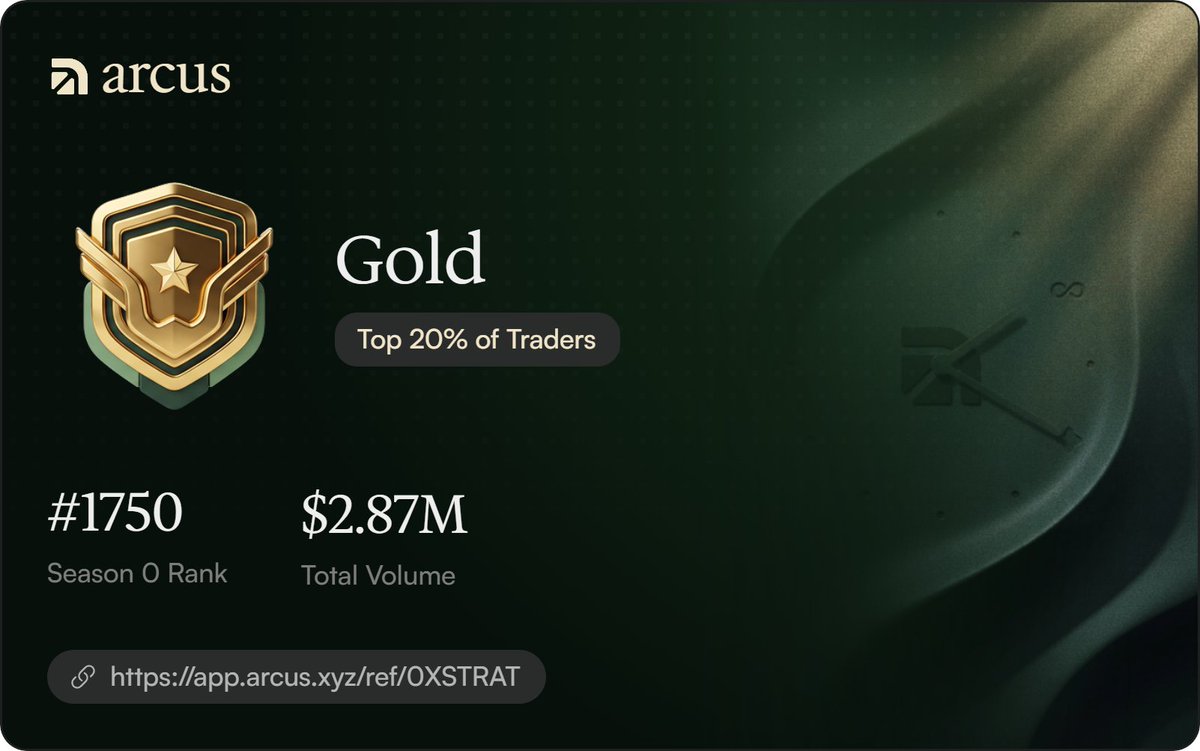
“After Variational, I think @arcus_xyz will be one of the Perp DEX projects that attracts the most attention from airdrop farmers. I was disappointed with my Season 0 result “Gold Tier, rank 1,750” but looking back, I also realized there were several things I could have done better.”
@0xStrat, 1 October 2026, 2,880 views14. This is the start of a longer post, which advises real trading over churned volume: “Don’t simply churn volume. Build genuine positions and avoid behavior that looks like wash trading or self-matching.”4
Only the first tweet states an income. The other two name a project and give no dollar figure477.
What the scheme is
A token is a digital coin that a crypto project creates and that can be traded for money once it is listed on an exchange. An airdrop is a project giving some of its new tokens, free, to people who used its product before the token existed.
Airdrop farming is using new crypto products on purpose, in the hope of being on the list when the tokens are handed out. Most projects now keep score with points: a tally of each user’s activity that the project may later convert into tokens. A wallet is the account a person uses on a blockchain; one person can open many.
The collection shows three forms.
- Tap-to-earn apps. The first tweet’s thread, read in a copy on Thread Reader, promotes a free app inside the Telegram messenger. The thread names it @CatTapCoin, with a token called $TAPCAT3. Users collect points in four ways the thread lists as “Automatic Farming”, “Mines”, “Referrals” and “Tasks”, and the thread says the project “promises listing” on large exchanges3.
- Perp DEX points. A “perp DEX” is an exchange run by software on a blockchain where people bet on the price of crypto with borrowed money. “Perp” is short for perpetual futures, a bet on price with no end date. The third tweet is about two of them, Variational and Arcus4. Farming here means trading.
- Testnets and on-chain tasks. A “testnet” is a trial version of a new blockchain. “On-chain” means recorded on the blockchain. Farmers use the trial network or new product and complete lists of tasks, hoping the activity counts later. The second tweet’s banner points to this form77. We did not research Talus itself; the page uses older, completed airdrops of this kind.
The mechanism is real. Projects have given away tokens worth hundreds of millions of dollars this way3150. The questions are how much reaches a typical participant, what it costs to qualify, and who is paid for certain.
The arithmetic
Step 1: what the tweets give us to work with
The first tweet claims “$1k-$10k/month” and “$100k+” from “a phone and a few minutes a day”1. Its text does not name the app, the payout per user, the number of accounts, the money put in or the costs2. Its image shows a balance screen with three monthly “Receive” rows of 10,120, 11,680 and 9,800 USDT, typed “Tapping” and dated 15 May, 15 June and 15 July 20242. USDT is a coin designed to be worth one dollar. We did not check what the image records or where it comes from.
The thread rests its claim on an earlier game, Notcoin: “For each account that simply joined tg bot, they gave $300”3. No source is given; Step 2 checks the figure. The app the thread promotes is a different, newer one, and we found no trace of its token being listed, which is not proof either way3.
The third tweet reports a rank and no payout. None exists yet: Arcus has announced no token421. Its image is an Arcus card reading “Gold”, “Top 20% of Traders”, “#1750 Season 0 Rank” and “$2.87M Total Volume”4. So $2.87 million of trading put that account 1,750th among more than 15,000 traders421.
None of the three tweets gives fees, the money put in or a value per point2477. We viewed each tweet’s image. We read the third post in full, the first thread only in a third-party copy, and only the first post of the Talus thread377. So the claimed income cannot be rebuilt from the tweets. The steps below rebuild it from the nearest documented cases.
Step 2: the phone-only version
Hamster Kombat was the largest tap-to-earn airdrop, on 26 September 2024. The company said over 300 million people had joined since 26 March 2024 and 131 million qualified69. About 2.3 million were then banned, leaving about 129 million69. The company said the bans were “for cheating”; the report does not say what the cheating was6.
- 60 billion tokens went to 131 million users, about 458 each on average (our division)6.
- At the airdrop-day price of about $0.007, that is about $3.20 per user, a press estimate that our sum matches78. The token closed its first day on Binance, a large exchange, at $0.006569.
- Players quoted in the press said their holdings were worth under $10 after months of daily play, and one author estimated $5 to $20 for ordinary players810.
- 88.75% of each allocation could be claimed on day one; the rest was locked for 10 months9.
Notcoin is the better case. The Block reported that “72,265,851,714 tokens have been distributed to miners” from “a community of over 35 million players”72. That is about 2,065 tokens per player (our division). The token closed its first day on Binance, 16 May 2024, at $0.0076, so the average was about $1669. At the all-time high of $0.0284 on 2 June 2024 it was about $5911. The thread’s “$300” per account is 5 to 19 times that average (our sum); it would have needed a top allocation or several accounts. The report does not say how many players claimed, so the average per claimant may be higher72.
Our estimate: across the two largest games the average at launch was about $3 to $16. At $3.20 each, $1,000 takes about 310 average allocations; at $16, about 60. Each was a single payment after months of play (six months at Hamster Kombat, our count), not a monthly income9.
The tokens then fell. Hamster Kombat’s trades at $0.00016, down 97.7% from its launch-day high, and Notcoin is down 98.3% from its June 2024 high11.
Step 3: how a point is earned on a perp DEX
Variational is the one programme where the sums can be done, because it has published a conversion rule. Its documents say 32% of its token supply will be “airdropped proportionally to points holdings”, all unlocked at the token launch, set for the last quarter of 202612. A press report says the points programme had been due to end in the third quarter and that the launch was pushed back18. Weekly distributions “will conclude no later than the end of Q4 2026”13. Variational gave out 3,000,000 points retroactively when the programme opened on 17 December 202513.
The weekly amount is 150,000 points, according to two press reports of Variational’s announcement1820. The documents we read do not state it, and we could not open the announcement itself1213.
How much trading earns one point is not published; points follow “a variety of activity metrics”13. Our estimate, from Variational’s statistics feed read on 10 October 2026:
- Total trading volume so far is $400.1 billion16. About 9.45 million points have been issued: 3 million plus 43 weekly rounds of 150,000 (our count)1318. That is about $42,000 of volume per point on average.
- The latest 24 hours of volume were $1.54 billion to $1.61 billion in two readings16. Seven such days are about $11 billion, against 150,000 points a week: about $72,000 to $75,000 of volume per point at today’s pace.
So one point costs roughly $42,000 to $75,000 of trading volume (our estimate). The sum assumes points track volume, which the documents do not promise, and it rests on the press figure of 150,000 a week. The cost of a point has risen as more volume chases the same weekly pool.
For Arcus no such sum is possible. It hands out a fixed 250,000 points a week and says “This amount does not change with platform growth or adoption”21. Its test period had more than 15,000 traders and more than $5 billion of volume21. Split evenly, that is about 17 points a week per trader (our division), and each new farmer makes every share smaller. But the split is not even: allocations “weigh how you trade, not merely volume”21. Arcus shows Season 0 rankings but not yet the point totals, which it says “will be revealed at a later date”21. Season 1 opened on 1 October 2026 and the programme “will conclude no later than the end of H1 2027”, which leaves up to about 39 weekly rounds (our count)21.
Step 4: what a point might be worth
Nobody knows yet. Variational’s token does not exist, so its points have no market price12.
A press report puts a Variational point at about $44.50 to $59.2018. It assumes the project will be valued at $1.53 billion to $1.85 billion at launch, figures taken from a betting market, with 10 to 11 million points in total18. Our check: 0.32 x $1.53 billion ÷ 11 million = $44.50, and 0.32 x $1.85 billion ÷ 10 million = $59.20. These are scenarios, not prices.
One past case gives a comparison. Lighter, another perp DEX, converted about 12.5 million points into 250 million tokens on 30 December 202550. That is about 20 tokens per point (our division). The point total comes from press reports, not from Lighter. Launch-day prices differ by source, and the value has moved a great deal since:
| When | Token price | One Lighter point (our sum) |
|---|---|---|
| Launch, 30 December 2025, per a company blog52 | opened above $3.30, settled near $2.50 | $50 to $66 |
| 2 January 2026, per Galaxy Research50 | about $2.74, “down from pre-market highs near $4.5” | about $55 |
| 19 January 202652 | about $1.77 | about $35 |
| 31 March 2026, the lowest price recorded11 | $0.78 | about $16 |
| 10 October 202611 | $3.72 | about $74 |
For Arcus there is nothing to multiply. Its terms say “The existence of a Points Program does not guarantee a later token generation event, token migration, reward airdrop, or similar event”22.
Step 5: the trading volume the claimed income needs
Volume needed = income wanted ÷ value per point x volume per point. These are our estimates from Steps 3 and 4, for Variational only. The $35 and $74 rows borrow Lighter’s point at its January level and today’s; $59 is the top of the press range for Variational.
| Income wanted | Assumed value of a point | Points needed | Volume at $42,000 a point | Volume at $75,000 a point |
|---|---|---|---|---|
| $1,000 | $35 | about 29 | about $1.2 million | about $2.1 million |
| $1,000 | $59 | about 17 | about $0.7 million | about $1.3 million |
| $1,000 | $74 | about 14 | about $0.6 million | about $1.0 million |
| $10,000 | $35 | about 286 | about $12 million | about $21 million |
| $10,000 | $59 | about 169 | about $7.1 million | about $13 million |
| $10,000 | $74 | about 135 | about $5.7 million | about $10 million |
- It is not a monthly income. The payout is one lump at the token launch, and the programme ends there1213. “$10,000 a month” would need that volume every month and a new programme to move to afterwards.
- The value of a point is a guess until the token trades12.
- Volume is not money put in. Perp DEXs let traders borrow. Arcus offers “Up to 50x at launch”, meaning positions up to 50 times the trader’s own money (“leverage”)7527. So millions of dollars of volume can be turned over on a few thousand dollars. We found no source for how much money farmers actually put in.
For scale: on Arcus’s public 30-day leaderboard, the trader ranked 100th by volume traded about $15.2 million and paid about $2,740 in fees25.
Step 6: the costs
The spread. Variational charges no trading fee: “Omni generates revenue by capturing the spread, not by charging users fees.”14 The spread is the gap between the buying and selling price, measured in basis points, hundredths of one percent. A trade pays about half the quoted spread, because a trader crosses half of the gap going in and half coming out. Quotes on 10 October 2026 showed 1.0 to 1.6 basis points on bitcoin at small sizes16. Spreads widen with size and in smaller markets: for a single $1 million trade the feed showed about 1.1 basis points on bitcoin, 5.5 on ether, 11.6 on solana and 32.6 on the HYPE market16. A January 2026 guide put the cost at 4 to 6 basis points per opening trade, which is already a per-trade figure19.
One worked case: $1 million of Variational volume (our estimate).
- Points earned: about 13 to 24 (1,000,000 ÷ 75,000 and ÷ 42,000).
- Spread paid: about $50 to $80 at today’s small-size bitcoin quote, or $400 to $600 at the January guide’s figure1619.
- Value: about $470 to $1,400 if a point turns out to be worth $35 to $59.
On these numbers one rule-abiding account comes out ahead on spread alone. Several things can undo that. Points may not track volume. Spread is far higher at size and outside bitcoin. Price moves and funding (below) are not counted. Each week’s points are shared among more volume as farmers arrive. And points can be cancelled17.
Fees elsewhere. Arcus charges “takers” (traders who accept the price on offer) 0.0225% during its test period and 0.045% as standard2475. So $1 million of taker volume costs $225 now and $450 at the standard rate. Hyperliquid, the largest perp DEX, charges 0.045% for takers and 0.015% for “makers” (traders who post an offer and wait) at its base level28.
What these figures leave out. Price moves against the trader, the periodic payments between traders that perps carry (“funding”), a 0.5% charge on Variational when a losing position is forcibly closed, and the cost of holding an opposite position on a second exchange14. We found no source that measures these for farmers.
The Arcus leaderboard gives one glimpse. Of the 100 largest traders by volume over 30 days, 67 show a negative result25. The amounts are small beside the volume. Together the 100 were down about $246,000 on about $9.6 billion of trading and paid about $603,000 in fees25. The middle result was a loss of about $1,950; the range ran from a loss of about $142,000 to a gain of about $400,00025. The feed does not say whether results are net of fees. These are the 100 largest accounts and say nothing about small traders betting on direction.
Tools for many accounts. Anti-detect browsers make many accounts look like separate people. AdsPower lists $9 a month for its smallest paid plan and $61 for its business plan76. Dolphin Anty lists $10 a month for 20 to 60 browser profiles, rising to $299 for its enterprise plan65.
What people who tried it report
We found no dataset showing what share of farmers end up ahead after fees and time. What exists is counts of what wallets received, two academic papers, a price study and interviews. Every figure here is before costs. Dollar values at first-day closing prices are our sums.
The typical payout is far below the average. “Median” means the middle recipient: half got more, half got less.
- Hyperliquid, November 2024, the most generous case. About 94,000 wallets received tokens3134. The average was about 2,900 tokens, but the median was 64.533233. 56.6% of recipients got 100 tokens or fewer31. A quarter got more than about 380, and one in a hundred more than about 58,00033. Dollar values are in “The upside”.
- Arbitrum, 2023, one wallet doing on-chain tasks. 583,137 addresses claimed. The median was 1,250 tokens and the average 1,87435. Allocations ran from 625 to 10,250 tokens36. The token closed its first day at $1.32, so the median was about $1,650, the floor about $830 and the cap about $13,50069.
- zkSync, 2024. 695,232 wallets shared 3.675 billion tokens, from a floor of 917 to a cap of 100,000 each44. At the first-day close of $0.213 the floor was about $19569.
- Monad, 2025. 229,433 accounts in its “Onchain Users” group were allocated 1.705 billion tokens, about 7,400 each, and only 41% of those tokens were claimed49. At the first-day close of $0.0305 the average allocation was about $23071.
- Uniswap, 2020. A flat 400 tokens went to each address that had ever used it37.
Many who do the work get nothing.
- LayerZero said 1.28 million of 6 million wallets that used it were eligible, about one in five (our division), and flagged more than 800,000 addresses as possible many-wallet farmers42. At the time, “there is no official breakdown of the eligibility criteria yet”43.
- Linea flagged 516,960 of 1,297,203 otherwise eligible addresses and removed them, about 40%47.
- Arbitrum gave nothing to wallets under 3 points and published its rules only after the cut-off date36.
- Hamster Kombat qualified fewer than half its claimed players6.
“Sybil” is the industry’s word for one person posing as many users through many wallets. It appears in most of these rules.
Running many wallets is behind some of the biggest wins, and it is what projects remove. A 2025 academic paper modelled 150 groups of wallets reported as farms on a service called Hop38. 104 of the groups (69.3%) would have made a profit after network fees, the charge for each blockchain transaction38. “The average per-address reward for most groups does not exceed $200”38. All of these addresses were disqualified, so what they received was nothing38. This is one project in 2022, and a model, not a record of results.
What the tokens did afterwards depends on the kind of airdrop.
- Chain, game and task airdrops of 2024 mostly fell. Keyrock, a trading firm, studied 62 airdrops in 2024: “only 8 had positive returns after 90 days”40. It adds: “the crypto market as a whole has not performed well during this period, which complicates the picture”40.
- A comparison of eight older large airdrops found six down 92% to 99% from the day of claiming, Uniswap up 8% and Hyperliquid up about 36 times41. This is a repost of a data firm’s figures.
- The three perp DEX tokens that have paid show a different record. On 10 October 2026 Hyperliquid stood at $84.25, against $2.00 to $6.25 on its first day1170. Lighter stood at $3.72, above the launch range one blog gives, after falling as low as $0.781152. Aster stood at $0.71, 71% below its September 2025 high and about seven times its lowest recorded price, set a week before that high11. Three cases are too few for a rate.
Most recipients sell early. 95.18% of Arbitrum recipients sent their tokens to exchanges35. Among the 10,000 largest zkSync recipients, “nearly 41% of tracked addresses sold their entire airdrop” on day one45. “86% of recipient wallets have sold every single token they received” from Hyperliquid, at a median price of $6.25, against $67 when that count was written34. The count was published by a company that sells a crypto automation product and was not independently checked34.
After the airdrop, the farmers leave. Lighter’s trading volume fell nearly 70% in the three weeks after its token launch52. One company blog counts 23 other venues now running points programmes52.
No published farmer accounts with costs. We found no first-person report that pairs fees paid with tokens received and shows the wallets. Reddit refused our tools, so forum threads were not read.
What the rules allow now
Quotes here are from the projects’ own terms, read on 10 October 2026, unless marked.
Points are a promise of nothing.
- Arcus: points are not redeemable and guarantee no token22.
- Variational: points are “for your information and entertainment only” and “may be retracted, cancelled, invalidated or amended based on a criteria determined by us, or at our sole discretion”17.
- Hyperliquid: programme benefits “have no cash value unless explicitly stated otherwise”30. Its terms cap the company’s liability at $10030.
The usual farming methods are grounds for losing the points. Arcus’s terms make a user ineligible who engages in “Sybil activity, wallet splitting or farming, account or wallet rental, nominee accounts, or referral rings”22. They also exclude “delta-neutral, hedged, circular, self-canceling, or economically irrational activity that Arcus determines is undertaken primarily to farm Points rather than for bona fide product usage, even if such activity is not otherwise unlawful”22. “Delta-neutral” or “hedged” means holding opposite bets on two venues so that price moves cancel out. It is the standard low-risk way to produce volume. Arcus says points taken from such accounts go to other users21. Lighter’s rules said: “Sybil, self-trading, and similar activities will not earn points.”51 Variational reserves the right to change point totals “for inorganic behavior”13. The third tweet gives the same warning: self-matching or artificial volume “may be filtered or penalized”4.
What remains allowed is one adult using one account for real trading, with real risk. Arcus’s terms say: “BY USING THE SERVICES TO TRADE, YOU CAN LOSE UP TO THE ENTIRE AMOUNT OF YOUR ASSETS.”22
Age and country. Arcus’s services “are intended only for users who are 18 years of age or older”22. Arcus “is not available in the United States, United Kingdom, Canada and other restricted jurisdictions” and bans using a VPN (a tool that hides a user’s location) to get round the block23. Variational’s restricted list includes the United States, Canada and Taiwan17. Hyperliquid’s interface bars residents of the US and Ontario30. A resident of a blocked country who farms anyway is breaking the terms and can be cut off.
Why projects block countries and refuse to promise tokens.
- United Kingdom. The financial regulator banned the sale of crypto derivatives to ordinary consumers from January 2021, and in 2025 confirmed: “The FCA’s ban on retail access to cryptoasset derivatives will remain in place.”58
- United States, derivatives. On 7 September 2023 the futures regulator, the CFTC, issued settled orders against the operators of three software-run trading services (Opyn, ZeroEx and Deridex), with penalties of $250,000, $200,000 and $100,00059. The Deridex order found that its perpetual contracts “can be offered to retail users only on a registered exchange”; the other two made similar findings about other leveraged products59. The release notes each company’s “substantial cooperation”59. These orders concern only the companies named in them.
- United States, airdrops. On 17 March 2026 the securities regulator, the SEC, said some airdrops are not securities sales. It left out the kind farmers chase: where recipients must fulfil conditions such as “performing a specific task (whether or not related to a crypto asset), the interpretation would not pertain to such airdrop”56. That risk falls on the project, not the farmer.
- Dragonfly, a crypto investment firm with an interest in the question, estimates that US users missed $1.84 billion to $2.64 billion across 11 airdrops that blocked the US from 2020 to 202457.
Earlier cases. In complaints filed in 2022 and 2023, the SEC alleged that tokens given out by airdrop were unregistered securities, among other allegations68. The complaints concern only the issuers and promoters named in them, not farmers. Court records show both cases have closed, in April 2023 and March 2026; we did not read the judgments74. We found no regulator or court action against airdrop farmers or sellers of farming courses in two searches, which may be a gap in our search.
Tax. None of these rules is written for points programmes. The US tax office says of airdrops after a network split: “you will have ordinary income equal to the fair market value of the new cryptocurrency when it is received”60. The UK’s says: “Airdrops that are provided in return for, or in expectation of, a service are subject to Income Tax”61. Australia’s counts tokens received “in return for the provision of goods or services” as ordinary income62. So tax can be owed on the launch-day price even if the token falls before it is sold (our reading).
Theft. The FBI warned in June 2025 of “cyber criminals defrauding cryptocurrency users through the nonfungible token (NFT) airdrop feature” on one network, Hedera, “disguised as free rewards or incentives”64. A security firm that sells protection tools counted $83.85 million taken from 106,106 victims in 2025 by sites that trick users into signing away their wallet; that covers all such sites, not only false airdrop pages63.
Who makes money from it
In our 3 tweets: all three promote a named project, one ends with a referral link, and none points to a paid course in the text we read3477.
- The third tweet ends: “Referral: https://app.arcus.xyz/ref/0XSTRAT” and “I also have 2 invite codes available.”4 It also says “Season 1 also rewards referrals”4.
- The first tweet’s thread says of the app’s referral scheme: “You receive 15% of the points from a referred friend (I purposely didn’t share my referral link so you can share yours in the comments)”3. It closes by pointing readers to the author’s free Discord server and Telegram channel3. Today the profile links to a referral-format address on a trading app, fomo, with the words “copy-trade me here”, and the Telegram channel shows about 77,000 subscribers5. To copy-trade is to repeat another trader’s trades automatically. fomo’s terms say it “may offer certain referral programs”; we did not find the rates or whether this link earns under them5.
- The second tweet promotes a project called Talus77. We did not check whether its thread carried a referral link, and did not find what that campaign paid.
The trading venue is paid first, and for certain. Every farmed trade pays a fee or a spread. A third-party tracker shows Arcus users paid about $1.21 million in fees in the last 30 days, with no token announced, and Hyperliquid users about $89.6 million26. These totals cover all users, not only farmers26.
The promoter is paid second, through referrals. USDC, in the table, is a coin designed to be worth one dollar.
| Venue | What the referrer gets | Needed to get a code |
|---|---|---|
| Arcus2124 | 10% of a referred trader’s fees (15% at the top levels), plus 3% and 2% on two further levels, and a referral points bonus | An invite code for every $1 million of perp volume, own and referred |
| Variational15 | “a flat 5% of all spread paid by their referrals in USDC, and receive 1 point per 10 points earned by their referrals” | $1 million of own trading volume |
| Hyperliquid29 | “10% of referred users’ fees, less any fee discount they receive” | $10,000 of own volume |
Arcus announced its scheme under the title “Refer traders, earn forever”24. Under these terms a referrer earns from a follower’s trading whether or not any airdrop comes. We did not check whether any account quoted here has an arrangement with a project beyond the public referral scheme. Paying accounts in points for posts has been restricted: X’s developer rules now bar connected apps from giving “tokens, points, or cash in exchange for engagement”, according to a news report67.
Tool sellers are paid monthly. AdsPower’s page for crypto users says: “Win More Money from Airdrops”, with “Unique IPs and environments” to “protect against fraud flags”65. The tools are sold for the many-account method that projects filter out.
Courses are a small market here. A pack called “Airdrop Millionaire” lists at $36 with a $19 monthly add-on66. Udemy returns 3,405 results for “crypto airdrop”, and the airdrop courses on the first page have between 0 and 61 ratings66.
Farming groups sell access too. A team that told The Block in 2023 it had made close to $1 million from four airdrops also “sold 2,000 NFTs that provide trial access” to its research community48. NFTs are tradeable digital tokens, here used as entry passes.
Early, well-funded participants and farmers at scale have been paid. That evidence is next.
The upside
Airdrops have paid real money to real users. This section gives the best documented cases, each marked by who checked it. None of it changes the base rates above.
The best single airdrop
Hyperliquid sent about 274 million tokens to about 94,000 wallets on 29 November 2024, with nothing to buy32. The spread of results, as reported from one data dashboard33:
| Position among recipients | Tokens received | At $2.00, the first-day opening price | At $6.25, the first-day close and median selling price | At $84.25 (10 October 2026) |
|---|---|---|---|---|
| Lowest tenth | under 4.28 | under $9 | under $27 | under $360 |
| Median | about 64.5 | about $130 | about $400 | about $5,400 |
| Top quarter | 379.9 or more | about $760 | about $2,400 | about $32,000 |
| Top hundredth | 58,318 or more | about $117,000 | about $364,000 | about $4.9 million |
The dollar columns are our sums from the token counts and three prices33347011. The price rose from $2.00 to $6.25 within the first day and passed $13 a week later70. Press figures for the median differ only by the price used: $130 on the day of claiming in one report, “close to $2,250” in late December 2024 in another4131.
The table shows two things. The large results sat in the top few percent: about 4,000 wallets were in the top band31. And what a recipient did afterwards mattered as much as the farming: 86% of wallets sold everything, at a median of $6.25, and 6.8% of the airdropped tokens are still held34.
Other perp DEX payouts
- Lighter gave 25% of its supply, 250 million tokens, to holders of points earned during 202550. Galaxy Research wrote that it “executed cleanly and delivered meaningful value to early users”50. Galaxy discloses a financial interest in two rival venues, Hyperliquid and Aster50. The airdrop was worth roughly $625 million to $825 million at the launch prices in Step 4 (our sum)5052. We found no count of recipients or median allocation.
- Who got large Lighter allocations. One news report, citing other people’s wallet analysis, describes “five linked wallets that collectively received just under 10 million LIT, valued at roughly $26 million and representing about 4% of circulating supply”73. It says they had deposited about $5 million in April 202573. Lighter’s chief executive replied, according to the same report, that the wallets “belonged to a third-party liquidity provider involved during the private beta, not members of the core team”73. We did not check the wallets.
- Aster set aside 53.5% of its supply for airdrops and unlocked 704 million tokens at launch for people who earned points in its early programmes53. Its page gives no per-wallet amounts.
- Variational has published its 32% share but has not paid yet12.
Older, broad airdrops
Across 34,547 addresses that received at least three of five large airdrops between 2020 and 2023, one study found a median of $6,497 per address and an average of $9,38439. This counts winners only, reports no costs, covers about three years, and one person may hold many of the addresses. We read it in a news report, not the original.
Uniswap’s flat 400 tokens went to people who had simply used the product37. There was no prior announcement that we know of; that is our reading and is not in Uniswap’s post.
People’s own statements, and one traced case
- A team told The Block: “Blur gave us something like $300,000, Arbitrum gave us around $180,000, Aptos gave us $125,000 and Optimism, $120,000.”48 The reporter does not say the wallets were checked. The team runs a paid-access community48.
- The founder of an airdrop information site told The Block he does not see himself as an airdrop farmer and uses “just a handful of wallets” at high volume48. For Arbitrum he made more than 1,000 transactions with about $300,000 of volume and about $1,000 “in transaction fees and other fees”, and received a $15,000 airdrop48. The article does not say how many wallets that covered, or what his attempts on projects that paid nothing cost. He estimated that only 10% to 15% of projects give airdrops48.
- A blockchain analysis account traced one operator who received 3.01 million zkSync tokens, worth about $753,000, across 85 wallets46. The operator sent 2.71 million of them to an exchange and sold 300,000 for about $70,00046. This is tracing as reported by a news site; the costs are unknown.
- A farming newsletter estimated points on another perp DEX at “$370 to $870 per point” against a cost of about $10 to $20, and linked its own referral code55. That is a projection by an interested party; we did not check the outcome.
A realistic good result in the first year or two (our estimate)
No source measures farmers’ results after costs, so this rests on the allocations above.
- The common outcome. Nothing from programmes that never launch a token or that filter the wallet out, and a one-off of a few hundred dollars from one that pays. The Hyperliquid median was about $400 at the typical selling price; the zkSync floor and the average Monad on-chain allocation were about $2003444496971.
- A good result on a perp DEX. On the Step 6 sums, real trading on Variational could earn points worth roughly $470 to $1,400 per $1 million traded, against spread of $50 to $600, if press valuations hold and points track volume161819. For a competent trader doing a few million dollars of volume that is a few thousand dollars, once, before trading results and tax.
- A good result from on-chain tasks. The Arbitrum median of about $1,650 and the $6,497 median across three or more airdrops are the nearest anchors, both from before heavy filtering353969.
- When it really works. Being in the top quarter of an airdrop that turns out large, which at Hyperliquid meant about $2,400 or more at the typical selling price3334. Five and six figures went to the top few percent.
Nothing we opened supports “$1k-$10k/month” for “anyone”.
What it takes to compete
Four versions, kept apart
- Phone and a few minutes a day. When anyone can qualify, the pool is split very many ways: about $3 to $16 each on average in the two largest games676972.
- One wallet, on-chain tasks. It paid about $830 to $13,500 a wallet at Arbitrum in 2023, and about $200 at the zkSync floor and the Monad average since3644496971. Many wallets that did the tasks were left out4247.
- Many wallets. It has paid at scale46. Current programmes say it earns nothing, and past projects removed 40% of addresses or more4751.
- One real account, heavy real trading, early. This is where the documented large results are, and it is the version the rules allow2233.
What the people who succeed have
- Volume, which means money and trading skill. Variational’s first reward level needs $1 million of trading volume in 30 days and its top level $2.5 billion1315. The 100th trader on Arcus’s 30-day board traded about $15.2 million25. On Arcus, $2.87 million of volume reached rank 1,750 of more than 15,000, not the top421. A community proposal for a 2025 Jupiter airdrop, not the final plan, shows how rewards scale: about 70 tokens for wallets with $1,000 to $10,000 of volume and about 9,045 above $10 million54.
- Being early. Variational gave 3,000,000 points to people who traded before its programme opened, and those accounts keep a 10% boost13. Arcus’s Season 0 points went to private test users21. The Lighter wallets described above had deposited eight months before the token73. Hyperliquid’s tokens were “allocated in proportion to points earned at an early stage”31.
- More than volume. Arcus says it rewards market making, and the third tweet adds money kept on the venue and trading in its stock-token markets421. Those take capital and skill that churned volume does not.
- A reason to trade anyway. For someone who already trades perps, the points come on top of activity they would do regardless. For anyone else the spread, the fees and the trading results are pure cost.
- Standing with the project. Monad allocated 5,935 recognised community members almost the same pool as its 229,433 on-chain accounts: about 281,000 tokens each against about 7,400, roughly 38 times more (our division)49.
- An audience. Referrers collect a share of followers’ fees or spread and extra points1524.
- Picking projects that pay. One participant’s estimate is that 10% to 15% do48.
- A plan for selling and for tax. Most 2024 airdrop tokens fell within 90 days; the perp DEX tokens have swung widely in both directions4011.
A farmer quoted by The Block put it this way: “There’s no alpha in those sorts of groups … It’s all about the scale”48. “Alpha” is trader slang for an edge.
What it costs
- Spread or fees on every trade: about $50 to $600 per $1 million of volume on Variational on our estimate, more at size and in smaller markets, or $225 to $450 per $1 million of taker volume on Arcus161924.
- Trading results. Two thirds of the 100 largest Arcus accounts were down over the 30 days, typically by about $1,95025.
- Money held on a new venue, under terms that cap what the user can recover30.
- Tools, for those running many accounts: $9 to $299 a month6576.
- Time, for months, with no payment until a token launches, if one does22.
How to tell early which side you are on
These checks are our judgement, built from the figures above.
- Can you use the venue at all? Check the age and country rules first23.
- Has the project said points become tokens, and what share? Variational has published a share12. Arcus has not said its points convert22.
- How much of the programme is left, and how much has already been given out? At Arcus, Season 1 opened on 1 October 2026 with up to about 39 weekly rounds ahead, against a Season 0 total that is not yet shown21. At Variational, 3 million points went out before the programme opened, and it ends this quarter1213.
- What does one point cost you? Add up spread and fees paid and divide by points received each week. Compare it with a cautious value per point, not the highest estimate on X.
- Would you make these trades without the points? If not, every trade is a cost.
- Is your method one the terms name? Hedged positions, many wallets and referral rings are listed as disqualifying at Arcus22.
- Does the post you are following end in a referral link? If so, the programme’s terms give the referrer a share of your fees, and at Arcus referral points, whatever you receive424.
What we did not verify
- How many farmers come out ahead. No source gives the share who profit after fees, spread, funding, trading results and time. The nearest is the Hop model, which is one 2022 project and modelled, not realised38. We found no per-wallet data for any perp DEX points programme.
- The claims in the first tweet. The “$100k+” and “$1k-$10k/month” figures and what the attached image records were not checked. The thread was read in a Thread Reader copy, not on X. We did not find what became of the app it promotes, or its age rules. Our Notcoin average divides tokens by players, not by claimants.
- The other two tweets. We read only the first post of the Talus thread; Thread Reader has no copy of it. We did not research Talus or what its campaign paid. We did not find what Arcus’s “Gold” level required beyond what the tweet’s image shows.
- Variational’s weekly points. The 150,000 a week comes from two press reports; Variational’s documents do not state it and its X article could not be opened. Our total of about 9.45 million points is built on it; a press report puts the total at about 9.15 million at the end of September and projects up to 11 million by the end of the year18. Our volume-per-point figures also assume points follow volume. The statistics feed is an address we guessed; it is not linked from the documents we read.
- Any real price for points. All per-point values are scenarios.
- Arcus. No volume per point can be estimated. The leaderboard feed returned only 100 rows and does not say whether results are net of fees; its dollar scaling was checked against Arcus’s published fee levels2575. A help page still says “There’s no invite-code system”, against the 1 October post2175.
- Capital, funding and hedging costs. No source found; no estimate offered beyond spread and fees.
- Hyperliquid’s distribution. The median, average and percentiles come from press reports of one dashboard we did not open; two reports differ slightly on the average. We found no source on when its largest recipients did their trading, or on fees during the points period.
- Lighter. The point total, the number of recipients and the median allocation were not read at a Lighter source. Launch-day prices differ by source; the price feed also records a high of $7.86 dated 30 December 202511. The five-wallet finding and the company’s reply come from one news report.
- First-day prices. They are closing prices on one exchange each. Prices during the day ranged widely, and many recipients sold at other prices.
- LayerZero’s and Linea’s own announcements. LayerZero’s post was blocked by a bot check, directly and through a reader. Both rest on news reports, and we have no dollar values for them.
- Academic tables. Figures from the two papers were pulled from the HTML versions by a tool and should be re-opened before being quoted elsewhere.
- Testnet farming as such, including Talus: network fees, typical payouts, and how many testnets ever paid.
- Tax and regulation outside the US, UK and Australia; the judgments in the two SEC cases; X’s own text of its developer rule.
- Courses and services. Udemy prices, refund terms for any product, and several done-for-you farming services seen only in search summaries.
- Routes. x.com returned an error to our tools, directly and through a reader; tweets were read through api.fxtwitter.com. Reddit, Blockworks and BeInCrypto could not be read. The Block, Keyrock, CoinGecko’s website, Hyperliquid’s terms and several others were read through the r.jina.ai reader.
- Exact quotes. Many pages were read through a tool that extracts text. Quotes were not all checked word for word against the page.
- Whether the people named have seen this page. The people and companies named here were not contacted before publication.
Sources
“Read at source” means we opened the page itself on 10 October 2026. “Secondary” means we read an article or summary about the source, not the source itself. Figures marked “our estimate” in the text are our own sums. “Through a reader” means a service fetched the page for us because the site refused our tools directly.
- Does It Pay collection of 3 tweets on this scheme, collected 2026-10-06; individual tweets linked above. Read from our collected copy on 2026-10-10.
- @nobrainflip, tweet and attached image. https://x.com/nobrainflip/status/1812945830506340400 . 2024-07-15. Read at source on 2026-10-10 through api.fxtwitter.com; x.com itself refused our tools. The image was viewed.
- Thread Reader copy of the same thread. https://threadreaderapp.com/thread/1812945830506340400.html . 2024-07-15. Secondary (a third-party copy).
- @0xStrat, full text of the tweet and its attached image ( https://pbs.twimg.com/media/HThoSd8XgAAMiMF.jpg ). https://x.com/0xStrat/status/2105549731153752544 . 2026-10-01. Read at source on 2026-10-10 through api.fxtwitter.com; the image was viewed.
- @nobrainflip profile (through api.fxtwitter.com), Telegram channel https://t.me/s/cyclopalpha , and fomo terms https://fomo.family/terms (dated 2026-08-17, through a reader). Read at source on 2026-10-10.
- Cointelegraph, “Hamster Kombat airdrop: 131 million users qualified”. https://cointelegraph.com/news/hamster-kombat-airdrop-131-million-users-qualified . 2024-09-23. Read at source on 2026-10-10.
- TechFlow, Hamster Kombat airdrop value per user. https://www.techflowpost.com/en-US/article/20675 . 2024-09-27. Secondary.
- Decrypt, Hamster Kombat players on their allocations. https://decrypt.co/283246/hamster-kombat-players-gripe-airdrop-dust . 2024-09-26. Read at source on 2026-10-10 (also the Spanish edition, https://decrypt.co/es/283385/ ).
- Decrypt, Hamster Kombat allocation terms. https://decrypt.co/250702/hamster-kombat-airdrop-allocations-cant-claim-all-tokens-day-one . 2024-09-22. Read at source on 2026-10-10.
- HackerNoon, “How much did Hamster Kombat earn and why are users unhappy”. https://hackernoon.com/how-much-did-hamster-kombat-earn-and-why-are-users-unhappy . 2024-10-09. Secondary (the author’s estimates).
- CoinGecko price feed. https://api.coingecko.com/api/v3/coins/markets?vs_currency=usd&ids=hamster-kombat,notcoin,hyperliquid,lighter,aster-2 . 2026-10-10, prices as of 13:16 UTC. Read at source on 2026-10-10.
- Variational documents, token page. https://docs.variational.io/token/usdvar.md . Undated; it matches an X article dated 2026-09-24, https://x.com/variational_io/status/2102929439063765192 , which we could not open. Read at source on 2026-10-10.
- Variational documents, points and reward levels. https://docs.variational.io/omni/rewards/points.md and https://docs.variational.io/omni/rewards . Updated about 2026-09-25. Read at source on 2026-10-10.
- Variational documents, fees. https://docs.variational.io/omni/trading/fees.md . Undated. Read at source on 2026-10-10.
- Variational documents, referrals. https://docs.variational.io/omni/rewards/referrals.md . Undated. Read at source on 2026-10-10.
- Variational statistics feed. https://omni-client-api.prod.ap-northeast-1.variational.io/metadata/stats . 2026-10-10, two readings, the later at 13:15 UTC. Read at source on 2026-10-10; the per-point figures built on it are our estimate.
- Variational terms of service, https://docs.variational.io/legal/terms-of-service , last updated 2026-09-11; and restricted persons list, https://docs.variational.io/legal/restricted-persons , last updated 2026-04-20. Read at source on 2026-10-10 through a reader.
- ChainCatcher (Odaily), estimates of the value of a Variational point. https://www.chaincatcher.com/en/article/2292254 . 2026-09-25. Secondary.
- Odaily (BlockBeats), Variational guide. https://www.odaily.news/en/post/5208951 . 2026-01-23. Secondary.
- Crypto Briefing, Variational token launch and airdrop. https://cryptobriefing.com/variational-var-token-launch-airdrop/ . 2026-09-23. Read at source on 2026-10-10.
- Arcus, “Introducing Arcus Points”. https://arcus.xyz/blog/introducing-arcus-points . 2026-10-01. Read at source on 2026-10-10.
- Arcus protocol terms, including the points programme annex. https://arcus.xyz/legal/protocol-terms . Undated. Read at source on 2026-10-10.
- Arcus terms and eligibility help page. https://arcus.xyz/legal/terms and https://help.arcus.xyz/faq/onboarding-faq/access-eligibility/am-i-eligible.md . Undated. Read at source on 2026-10-10.
- Arcus fee levels and referral rates. https://api.arcus.xyz/v1/feetiers , https://api.arcus.xyz/v1/commissionrates , https://help.arcus.xyz/faq/referrals-fee-tiers-faq/referral-structure/how-much-do-referrers-earn-per-level.md and blog posts of 2026-07-09 and 2026-07-20. Read at source on 2026-10-10.
- Arcus public leaderboard feed. https://api.arcus.xyz/v1/leaderboard?window=30d&sortBy=volume&limit=5000 . 2026-10-10. Read at source on 2026-10-10; dollar amounts use a scaling checked against Arcus’s published fee levels.
- DefiLlama fees feed, Arcus and Hyperliquid. https://api.llama.fi/summary/fees/arcus?dataType=dailyFees . 2026-10-10. Read at source on 2026-10-10.
- Bitrue, Arcus airdrop guide. https://www.bitrue.com/blog/arcus-airdrop-guide-earn-points-robinhood-chain . 2026-10-01. Secondary.
- Hyperliquid documents, fees. https://hyperliquid.gitbook.io/hyperliquid-docs/trading/fees . Undated. Read at source on 2026-10-10.
- Hyperliquid documents, referrals. https://hyperliquid.gitbook.io/hyperliquid-docs/referrals . Undated. Read at source on 2026-10-10.
- Hyperliquid terms. https://app.hyperliquid.xyz/terms . Undated. Read at source on 2026-10-10 through a reader.
- ForkLog, on Hyperliquid’s airdrop. https://forklog.com/en/hype-or-a-new-standard-what-hyperliquids-airdrop-historys-most-generous-teaches-us/ . 2024-12-23. Secondary.
- Odaily, Hyperliquid airdrop distribution. https://www.odaily.news/en/post/5200155 . 2024-12-02. Secondary.
- AiCoin (Foresight News), Hyperliquid airdrop percentiles. https://aicoin.com/en/article/432278 . 2024-12-02. Secondary (through a reader).
- Otomato, “HYPE airdrop retention”. https://otomato.xyz/blog/hype-airdrop-retention . 2026-07-09. Read at source on 2026-10-10.
- Academic paper on airdrops, arXiv 2312.02752. https://arxiv.org/html/2312.02752v3 . 2023-12-05, revised 2024-10-17 and 2025-07-21. Read at source on 2026-10-10.
- Arbitrum Foundation, airdrop eligibility and distribution. https://docs.arbitrum.foundation/airdrop-eligibility-distribution . Undated (cut-off date 2023-02-06). Read at source on 2026-10-10.
- Uniswap, “Introducing UNI”. https://blog.uniswap.org/uni . 2020-09-16. Read at source on 2026-10-10.
- Academic paper on many-wallet farming of Hop, arXiv 2503.14316. https://arxiv.org/html/2503.14316v1 . 2025-03-18. Read at source on 2026-10-10.
- ForkLog, “Experts assess incomes of airdrop hunters”. https://forklog.com/en/experts-assess-incomes-of-airdrop-hunters/ . 2023-06-27. Secondary.
- Keyrock, “Airdrops in the barren desert”. https://keyrock.com/airdrops-in-the-barren-desert/ . 2024-09-25. Read at source on 2026-10-10 through a reader. Also DL News, https://www.dlnews.com/articles/snapshot/keyrock-study-says-most-token-airdrops-crash-after-launch , 2024-09-25, secondary.
- KuCoin news, repost of a comparison of eight airdrops. https://www.kucoin.com/news/flash/crypto-airdrop-data-shows-6-of-8-projects-lose-92-99-value-only-hyperliquid-delivers-36x-return . 2026-07-22. Secondary.
- The Block, LayerZero token and its filtering. https://www.theblock.co/news/ecosystems/2024-06-26-layerzeros-zro-token-faces-mixed-reactions-as-sybil-crackdown-continues-301626 . 2024-06-26. Read at source on 2026-10-10.
- The Defiant, LayerZero allocations. https://thedefiant.io/news/defi/layerzero-airdrop-allocations-disappoint-defi-users . 2024-06-20. Read at source on 2026-10-10 through a reader.
- ZK Nation documents, ZK airdrop. https://docs.zknation.io/zk-token/zk-airdrop . Undated (claims from June 2024). Read at source on 2026-10-10.
- Cointelegraph, top zkSync recipients sell on day one. https://cointelegraph.com/news/top-zk-token-airdrop-recipients-sell-first-day-nansen . 2024-06-18. Secondary.
- BTC-Echo, zkSync farmer with 85 wallets. https://www.btc-echo.de/news/zksync-airdrop-wie-ein-airdrop-jaeger-753-000-us-dollar-verdient-hat-186691/ . 2024-06-18. Secondary.
- The Block, Linea filters addresses. https://www.theblock.co/post/335979/linea-filters-over-half-a-million-sybil-addresses-from-upcoming-token-airdrop . 2025-01-21. Secondary.
- The Block, inside airdrop farming. https://www.theblock.co/post/225215/we-made-close-to-1-million-inside-the-murky-world-of-airdrop-farming . 2023-04-06. Read at source on 2026-10-10 through a reader; a direct request was refused.
- Monad, “The MON airdrop results”. https://monad.xyz/blog/the-mon-airdrop-results . 2025-11-10. Read at source on 2026-10-10.
- Galaxy Research, weekly top stories. https://www.galaxy.com/insights/research/weekly-top-stories-01-02-26 . 2026-01-02. Read at source on 2026-10-10. Also Yahoo Finance, https://finance.yahoo.com/news/lighter-lit-tokenomics-split-defi-215726814.html , 2025-12-30, secondary.
- Lighter documents, fees and points. https://docs.lighter.xyz/trading/trading-fees.md and https://docs.lighter.xyz/points-program.md . Undated. Read at source on 2026-10-10.
- Crypto Times, Lighter volume after launch. https://www.cryptotimes.io/2026/01/19/hyperliquid-wins-the-perp-wars-as-lighters-volume-falls-70/ . 2026-01-19. Read at source on 2026-10-10 through a reader (the $1.77 price and the fall in volume). Also BlockEden company blog, https://blockeden.xyz/blog/2026/04/28/perp-dex-cohort-2026-lighter-airdrop-hyperliquid-long-tail/ , 2026-04-28, secondary (the $3.30 and $2.50 launch prices and the count of 23 venues).
- Aster documents, tokenomics. https://docs.asterdex.com/usdaster-token/tokenomics.md . Undated. Read at source on 2026-10-10 through a reader.
- Jupiter forum, community proposal for the 2025 airdrop. https://discuss.jup.ag/t/jupiter-airdrop-round-2-2025-analysis-discussion-proposal-for-distribution/26133 . 2024-10-27. Read at source on 2026-10-10.
- Threading on the Edge newsletter. https://threadingontheedge.substack.com/p/how-i-am-farming-the-most-expensive . 2025-09-09. Read at source on 2026-10-10.
- US Securities and Exchange Commission, Release 33-11412. https://www.sec.gov/files/rules/interp/2026/33-11412.pdf . 2026-03-17. Read at source on 2026-10-10 through a reader.
- Dragonfly, State of Airdrops Report 2025. https://airdropreport2025.dragonfly.xyz/Dragonfly-s-State-of-Airdrops-Report-2025-1b1af13b644180c8aff9c2bd0d222e14 . 2025-03-11 (date from Decrypt’s coverage). Read at source on 2026-10-10.
- UK Financial Conduct Authority, ban on crypto derivatives for retail consumers, https://www.fca.org.uk/news/press-releases/fca-bans-sale-crypto-derivatives-retail-consumers , 2020-10-06; and https://www.fca.org.uk/news/press-releases/fca-opens-retail-access-crypto-etns , 2025-08-01, updated 2026-02-06. Read at source on 2026-10-10.
- US Commodity Futures Trading Commission, Release 8774-23. https://www.cftc.gov/PressRoom/PressReleases/8774-23 . 2023-09-07. Read at source on 2026-10-10.
- US Internal Revenue Service, questions and answers on virtual currency. https://www.irs.gov/individuals/international-taxpayers/frequently-asked-questions-on-virtual-currency-transactions . Updated 2026-06-30. Read at source on 2026-10-10.
- HM Revenue and Customs, Cryptoassets Manual CRYPTO21250. https://www.gov.uk/hmrc-internal-manuals/cryptoassets-manual/crypto21250 . Updated 2025-11-28. Read at source on 2026-10-10.
- Australian Taxation Office, staking rewards and airdrops. https://www.ato.gov.au/individuals-and-families/investments-and-assets/crypto-asset-investments/transactions-acquiring-and-disposing-of-crypto-assets/staking-rewards-and-airdrops . Date not captured. Read at source on 2026-10-10 through a reader.
- Scam Sniffer, 2025 phishing report. https://drops.scamsniffer.io/scam-sniffer-2025-crypto-phishing-losses-fall-83-to-84-million/ . 2026-01-03. Read at source on 2026-10-10.
- FBI Internet Crime Complaint Center, public service announcement. https://www.ic3.gov/PSA/2025/PSA250603 . 2025-06-03. Read at source on 2026-10-10.
- AdsPower, crypto page, https://www.adspower.com/solutions/crypto ; Dolphin Anty pricing, https://dolphin-anty.com/pricing (through a reader). 2026-10-07 (Dolphin Anty). Read at source on 2026-10-10.
- Digistore24, “Airdrop Millionaire”, https://www.digistore24.com/product/338556 ; Udemy search results for “crypto airdrop” (through a reader). Undated. Read at source on 2026-10-10.
- The Block, X bars apps that pay for posts. https://www.theblock.co/post/385847/ . 2026-01-16. Secondary.
- US Securities and Exchange Commission press releases. https://www.sec.gov/news/press-release/2023-59 (2023-03-22) and https://www.sec.gov/news/press-release/2022-175 (2022-09-28). Read at source on 2026-10-10.
- Binance public market data, daily prices for NOTUSDT (2024-05-16), HMSTRUSDT (2024-09-26), ARBUSDT (2023-03-23) and ZKUSDT (2024-06-17). https://data-api.binance.vision/api/v3/klines?symbol=NOTUSDT&interval=1d&startTime=1715817600000&limit=4 (the other three by changing the symbol and start time). Read at source on 2026-10-10.
- Hyperliquid public data feed, daily prices for its HYPE spot market from 2024-11-29 (a “candleSnapshot” request for market “@107” sent to https://api.hyperliquid.xyz/info ). Read at source on 2026-10-10.
- Coinbase Exchange public market data, MON-USD daily prices. https://api.exchange.coinbase.com/products/MON-USD/candles?granularity=86400&start=2025-11-24T00:00:00Z&end=2025-11-28T00:00:00Z . 2025-11-24. Read at source on 2026-10-10.
- The Block, “Notcoin goes live on TON blockchain, airdrops over 80 billion tokens”. https://www.theblock.co/post/294864/notcoin-not-token-airdrop-ton . 2024-05-16. Read at source on 2026-10-10 through a reader.
- coin360, on Lighter’s token launch and five linked wallets. https://coin360.com/news/lighter-lit-token-launch-airdrop-market-maker-controversy . 2026-01-02. Secondary (it reports other people’s wallet analysis and the company’s reply), read through a reader.
- CourtListener, court docket records for the two cases in source 68. https://www.courtlistener.com/docket/65383136/us-securities-and-exchange-commission-v-the-hydrogen-technology/ (closed 2023-04-20) and https://www.courtlistener.com/docket/67071330/securities-and-exchange-commission-v-sun/ (closed 2026-03-09). Read at source on 2026-10-10 through CourtListener’s search feed; the judgments were not read.
- Arcus help pages on fee levels, maximum leverage and invite codes. https://help.arcus.xyz/faq/arcus-perps-faq/fees/what-are-the-perp-fee-tiers.md , https://help.arcus.xyz/faq/arcus-perps-faq/margin-leverage-positions/what-s-the-maximum-leverage-per-market.md and https://help.arcus.xyz/faq/onboarding-faq/access-eligibility/how-do-i-get-an-invite-code.md . Undated. Read at source on 2026-10-10.
- AdsPower pricing. https://www.adspower.com/pricing . Undated. Read at source on 2026-10-10 through a reader.
- @StarPlatinum_, first post of a nine-post thread and its attached image. https://x.com/StarPlatinum_/status/1978167593770111344 . 2025-10-14. Read at source on 2026-10-10 through api.fxtwitter.com; the image was viewed, the other eight posts were not read.
Corrections
If you are quoted or named on this page and think something is wrong, want your reply shown beside it, or want to be removed, write to [email protected]. We aim to reply within 14 days, and always within one month. Factual errors are corrected with a dated note here. A sentence that is seriously disputed comes down while we check it.
Change log: (empty)